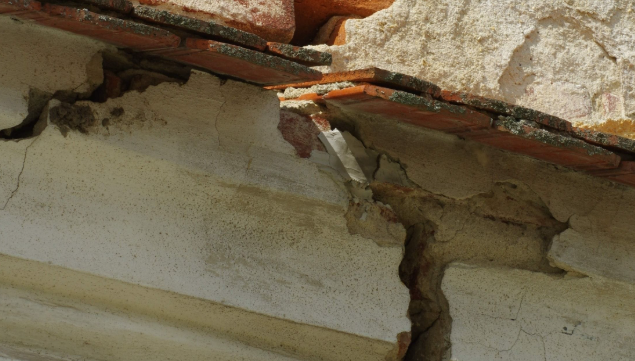
First time you notice a crack it’s never on purpose. You’re dusting a shelf or just sitting there and it’s suddenly there, along the corner near the window or over the door frame, and your head does the thing where it goes was that there before, then a second later, or did I just never look. You stare a bit too long. Then you forget it. Weeks later you walk past and it looks bigger, maybe, hard to say really. And somewhere in there you think should I actually get a structural engineer round for this or am I just being dramatic over some old plaster.
You look at it a bit longer than you need to. Then life carries on and you forget about it. Until you walk past again a few weeks later and it looks bigger than you remember.
Most people, if I’m honest, just leave it. Life’s busy, it’s one crack, who’s got time. Then a few weeks later you clock it again and think… hang on, has that got bigger? And now you’re standing there squinting at your own wall like a detective, trying to work out if you’re being paranoid or if this is actually a problem.
So let’s just talk through it properly, because Googling “is my house falling down” at midnight isn’t going to help anyone.
See also: Yacht for Sale Hong Kong: Luxury and Lifestyle on the Water
Most Cracks Are Genuinely Fine
Good news first. The vast majority of cracks you’ll see in a house are nothing to lose sleep over. Buildings move, that’s just what they do — they expand a bit in summer, contract in winter, plaster shrinks slightly as it dries out over the years. If you’ve had the heating on more than usual, or there’s been a proper hot or cold spell, tiny hairline cracks can just show up out of nowhere and mean absolutely nothing structural at all.
So no, you don’t need to panic every time you spot a mark on the wall. But there are certain things that do push it from “probably fine” into “actually worth getting checked” territory, and it’s worth knowing what those are.
What Actually Makes a Crack Worth Worrying About
Width’s a decent starting point. Hairline cracks — the kind you can barely fit a fingernail into — usually aren’t anything serious. But if you could genuinely slot a coin into it, that’s different.
Direction matters too, oddly enough. Straight up-and-down cracks tend to be less concerning than diagonal ones, especially diagonal cracks running off the corners of windows or doors. That diagonal pattern is often a sign of actual movement happening in the structure, not just surface-level shrinkage.
Then there’s whether it’s getting bigger. This one’s probably the biggest tell out of all of them, if we’re honest. Go back and check it in a month — if it’s noticeably wider or longer than it was, that’s not old news settling down, that’s something actively happening right now.
Doors and windows are worth paying attention to as well. If a door that used to shut just fine suddenly catches on the frame, or a window that opened easily now needs a good shove, that can be connected to the same movement causing the crack.
And this bit’s a slightly odd one but worth mentioning — if you’ve got a crack inside on a wall, and there’s a matching one roughly in the same spot on the outside of that wall, that’s usually more telling than an isolated crack on its own.
Floors too, actually. Some people only really notice a sloping floor when they put something round on it — a marble, a ball, whatever’s lying around — and watch which way it rolls. Sounds silly but it genuinely works as a rough test.
If you’re seeing a few of these together rather than just one on its own, that’s really the point where it stops being a “keep half an eye on it” thing and becomes a proper “get someone in” thing.
So What’s Actually Causing It?
A few usual culprits show up again and again. Subsidence is the one people worry about most, understandably — that’s when the ground under the foundations shifts or sinks, often because of clay soil drying out, tree roots pulling moisture from underneath the house, or building work happening nearby. London’s got a fair bit of clay soil scattered around, which is part of why this comes up more here than it does in some other parts of the country.
Then there’s settlement, which sounds scary but is actually pretty normal — buildings settle slightly as the ground adjusts under the weight, especially newer builds. Older houses can go through a bit of this too if there’s been recent work nearby, like next door digging out a basement or adding an extension.
And sometimes it’s simpler than either of those — just a beam or lintel that’s degraded over the years, particularly in older properties where the original materials weren’t quite up to modern standards.
Honestly though, the only way to actually know which of these you’re dealing with is to get it properly looked at. Guessing based on a forum post or a video someone made at 11pm isn’t going to give you a real answer.
Why Bothering to Call Someone Is Worth It
I get the hesitation, genuinely. Paying for an inspection on something that might turn out to be nothing feels like a waste. But here’s the thing about waiting — it rarely makes things cheaper if it does turn out to be something. Structural problems tend to get more expensive the longer you leave them, and depending on what’s going on, they can start affecting the actual safety of the building, not just how it looks.
Getting a structural engineer near me to come and take a proper look early means one of two things happens. Either they tell you it’s nothing, which — genuinely, that relief alone is worth the callout fee. Or they catch something early enough that sorting it is still fairly straightforward, rather than turning into a massive, expensive job six months down the line.
What Actually Happens When They Come Look
It’s not just someone glancing at the crack for ten seconds and nodding, for what it’s worth. They’ll look at the pattern of it, the direction, check the rest of the property for anything else worth noting, and sometimes fit crack monitors if it’s not immediately clear whether it’s still moving — little devices that track any change over a few weeks or months.
They’ll also factor in things like nearby trees, how the drainage’s been behaving, what the soil’s like in your area, and whether there’s been any building work close by recently that could be connected.
Depending on what they find, you might just walk away with some reassurance and advice on keeping an eye on it yourself. Or, if something looks more serious, they might recommend trial pits to actually check what’s going on with the foundations properly.
Local Knowledge Actually Helps Here, More Than You’d Think
This is one of those cases where hiring a local structural engineer in London specifically tends to work out better than just picking someone random off a national directory. Soil conditions genuinely vary quite a bit across different boroughs in London, and someone who deals with this regularly across the city already has a decent sense of which areas tend to have more subsidence issues, how nearby construction might be affecting things, and what your specific local council usually wants to see.
There’s a practical side too — if a crack’s actively getting worse, you don’t really want to be waiting two or three weeks for someone to travel across the country to have a look. Local generally just means faster.
Alright, Wrapping This Up
A crack on its own doesn’t mean your house is falling down, and most of the time it really is just a building doing what buildings do over the years. But if it’s widening, running diagonally, showing up alongside doors that suddenly won’t shut properly, or just making you feel a bit uneasy every time you walk past it — that instinct’s probably worth listening to rather than brushing off.
So if you’re standing there right now genuinely unsure whether what you’re looking at matters, it’s probably time to search for a Structural Engineer Near Me and just get it checked properly. Better to know either way than spend the next few months wondering every time you walk past that wall.