Nail technicians perform some of the most sustained and detailed work in the beauty industry, often in fixed positions for hours at a time. The right salon stools can mean the difference between a career that lasts decades and one cut short by preventable injury. This guide examines what nail technicians specifically need from their seating.
The Specific Demands of Nail Technician Work
Forward Lean and Lower Back Stress
Nail work requires sustained forward lean as technicians work close to the client’s hands or feet. Without proper seat support, this position places enormous stress on the lumbar spine. A stool with lumbar support or a saddle design that naturally tilts the pelvis forward dramatically reduces this stress and allows technicians to work longer with less fatigue.
Many nail technicians develop chronic lower back pain within their first three years of practice due to poor seating. This is an entirely preventable occupational hazard with the right ergonomic setup.
- Lumbar support counteracts forward lean
- Saddle design promotes upright posture
- Adjustable armrests reduce shoulder strain
- Anti-fatigue cushioning extends working comfort
Height Adjustment for Nail Stations
Matching Stool Height to Your Table
The ideal stool height positions the nail technician with their forearms roughly parallel to the table surface, with no need to raise the shoulders or bend excessively from the waist. Since nail tables vary in height, choose a stool with a wide enough adjustment range to accommodate your specific workstation dimensions and your own height.
Swivel and Mobility for Table Access
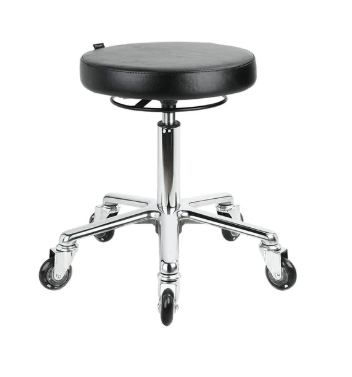
A smooth 360-degree swivel function allows nail technicians to access different areas of the nail table and reach tools without standing up or awkwardly twisting the spine. Caster wheels add additional mobility for technicians who need to reposition frequently during complex nail art sessions.
Durability and Cleaning Considerations
Nail technician stools come into contact with nail dust, chemicals, and polish residue on a daily basis. Choose upholstery that resists chemical staining and wipes clean easily. Hydraulic cylinders should be fully enclosed to prevent nail dust from affecting the lift mechanism over time.
Frequently Asked Questions
Should nail technicians sit or stand while working?
Alternating between sitting and standing throughout the day provides the best ergonomic outcome. A sit-stand stool that accommodates both positions gives nail technicians the most flexibility.
What is a saddle stool and is it good for nail work?
A saddle stool mimics horseback riding posture, tilting the pelvis forward to encourage an upright spine. It is highly effective for nail work because it reduces lower back pressure during prolonged forward-leaning tasks.
Are caster wheels necessary for nail technician stools?
Casters are helpful for easy repositioning but require a smooth salon floor. If your floor is carpeted or textured, glides may be more stable and practical.
Conclusion
Nail technicians deserve equipment designed for the specific physical demands of their work. A well-chosen stool supports spinal health, enables precise technique, and extends career longevity. Invest in seating that takes care of your team as well as they take care of their clients.