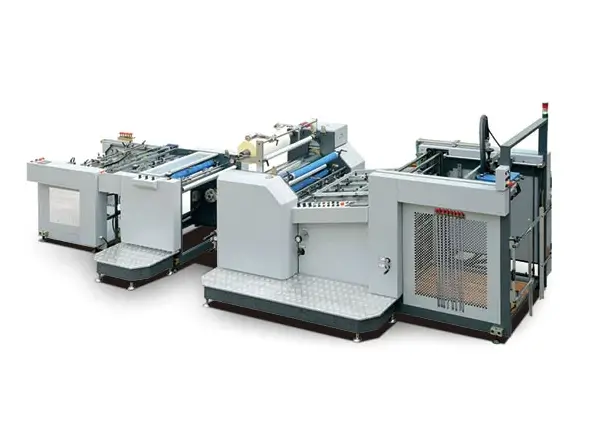
In today’s fast-paced industrial environment, automation has become the foundation of efficiency and productivity. From packaging to printing, every industry is moving toward smarter and more intelligent machines. One of the most important innovations in this transformation is the automated laminator.
An automated laminator is designed to perform lamination processes with minimal human involvement while maintaining high speed, precision, and consistent quality. It is widely used in commercial printing, packaging production, advertising, and industrial manufacturing where large-scale output and flawless finishing are required.
What is an Automated Laminator?
An automated laminator is an advanced machine that applies a protective or decorative layer onto materials such as paper, film, foil, or synthetic sheets using a fully or semi-automatic system.
Unlike manual or basic laminating machines, automated systems control feeding, alignment, lamination, and output processes automatically through digital controls and sensors. This reduces human error and improves production efficiency.
These machines are commonly used in industries that require continuous production and high-quality finishing standards.
Importance of Automated Laminator in Modern Industry
As industries grow, the demand for faster and more reliable production systems increases. The automated laminator plays a key role in meeting these requirements.
Key importance factors include:
- Fully automated production process
- High-speed lamination capability
- Consistent and uniform output quality
- Reduced labor dependency
- Improved operational efficiency
- Lower production errors
These advantages make it a critical machine in modern industrial workflows.
Working Process of Automated Laminator
The working mechanism of an automated laminator is based on intelligent control systems and precision engineering.
Automatic Material Feeding
Materials are automatically fed into the machine without manual intervention.
Digital System Setup
Operators set parameters such as speed, temperature, and pressure through a control panel.
Film Application
A protective lamination film is applied evenly across the material surface.
Automated Lamination
Rollers apply consistent pressure to bond layers smoothly and accurately.
Quality Monitoring
Sensors continuously monitor alignment, pressure, and output quality.
Final Output Collection
Finished laminated materials are automatically collected or stacked for further use.
This fully automated process ensures high efficiency and reliability.
Types of Automated Laminator Machines
Different types of automated laminators are available depending on industry requirements.
Fully Automatic Laminators
These machines handle the entire process automatically and are ideal for large-scale production.
Semi-Automatic Laminators
Require partial manual input but still provide high efficiency and control.
Wide-Format Automated Laminators
Used for large printing materials like banners, posters, and signage.
Industrial Automated Laminators
Designed for heavy-duty continuous production in manufacturing industries.
Smart Digital Laminators
Equipped with AI and IoT-based monitoring systems for advanced control.
Each type serves specific production needs.
Key Features of Automated Laminator
Modern automated laminators are equipped with advanced features to improve productivity and accuracy.
Full Automation System
Reduces manual labor and ensures continuous operation.
High-Speed Performance
Supports large-scale production with fast processing.
Precision Control Technology
Allows accurate adjustment of pressure, temperature, and speed.
Smart Sensor Integration
Detects errors and maintains quality consistency.
Energy Efficient Design
Reduces power consumption while maintaining performance.
User-Friendly Interface
Digital screens make operation simple and efficient.
Applications of Automated Laminator
Automated laminators are widely used across various industries due to their flexibility and efficiency.
Printing Industry
Used for magazines, brochures, catalogs, and marketing materials.
Packaging Industry
Improves durability and appearance of packaging products.
Advertising Industry
Used for banners, posters, and promotional displays.
Corporate Sector
Used for official documents, reports, and presentations.
Educational Institutions
Used for charts, maps, and learning materials.
This wide application range makes it highly valuable.
Advantages of Automated Laminator
Businesses using automated laminators gain many benefits.
High Productivity
Supports continuous and fast production.
Reduced Labor Cost
Automation minimizes manual work requirements.
Consistent Quality
Ensures uniform lamination across all outputs.
Time Efficiency
Speeds up production cycles significantly.
Cost Savings
Reduces waste and operational costs.
Easy Operation
Digital systems make control simple and efficient.
See also: What Data Do Business Intelligence Consultants Need to Get Started?
Technological Innovations in Automated Laminator
Modern automated laminators are equipped with advanced technologies that enhance performance.
Key innovations include:
- PLC-based automation systems
- IoT-enabled monitoring
- AI-based quality control
- Touchscreen control panels
- Automatic tension adjustment
- Real-time production analytics
These innovations ensure high accuracy and efficiency.
Role in Modern Industry
The automated laminator plays an important role in modern industrial production. As businesses move toward automation, this machine helps improve efficiency and reduce human dependency.
It supports industries in achieving:
- Faster production cycles
- Higher quality standards
- Better operational control
- Increased profitability
This makes it an essential part of modern manufacturing systems.
Environmental Benefits of Automated Laminator
Modern automated laminators are designed with sustainability in mind.
Eco-friendly benefits include:
- Reduced energy consumption
- Lower material wastage
- Efficient resource utilization
- Support for recyclable materials
- Cleaner production processes
These features help industries meet environmental goals.
Challenges of Automated Laminator
Despite its advantages, there are some challenges:
- High initial investment cost
- Requirement for technical expertise
- Regular maintenance needs
- Complex system setup
However, long-term efficiency and savings make it a valuable investment.
Future of Automated Laminator
The future of automated laminator technology is focused on smart manufacturing and AI integration.
Future developments may include:
- Fully AI-controlled production systems
- Smart factory integration
- Predictive maintenance technology
- Ultra-fast lamination systems
- Advanced eco-friendly materials
These innovations will further enhance productivity and sustainability.
Conclusion
The automated laminator is a revolutionary machine that has transformed modern lamination processes. With its automation, precision, and high-speed performance, it has become an essential tool in printing, packaging, and industrial manufacturing.
As technology continues to advance, automated laminators will play an even more important role in creating efficient, cost-effective, and sustainable production systems worldwide.